
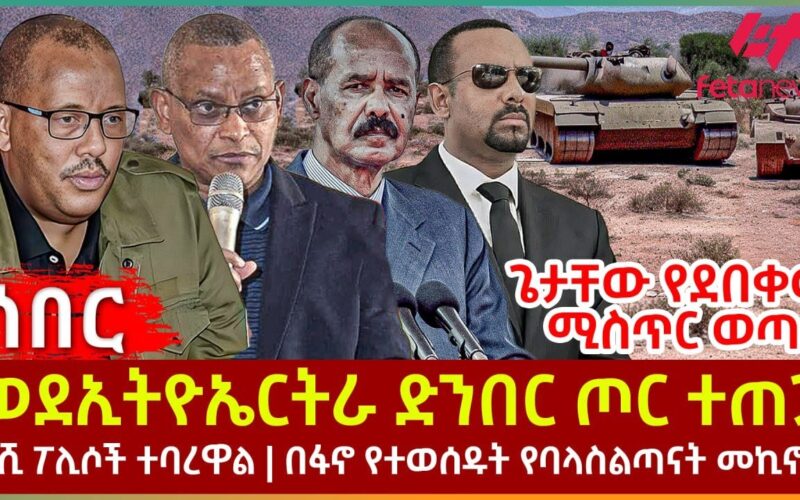
The Ethio-Eritrean border refers to the international boundary that separates Ethiopia and Eritrea. This border has been a source of significant tension and conflict between the two countries in the past, including a long and devastating war that lasted from 1998 to 2000.
The conflict over the border was rooted in disputes over the exact demarcation of the boundary, which was left unresolved when Eritrea gained independence from Ethiopia in 1993. The war resulted in thousands of deaths and widespread suffering on both sides.
In 2000, a ceasefire agreement known as the Algiers Agreement was brokered, and a subsequent ruling by the Eritrea-Ethiopia Boundary Commission (EEBC) in 2002 attempted to establish a clear boundary. However, the demarcation process faced numerous challenges and disputes between the two countries, preventing the full implementation of the ruling.
In 2018, Ethiopian Prime Minister Abiy Ahmed took office and initiated a peace process with Eritrea. The two countries signed a historic peace agreement in July 2018, ending two decades of hostility and reopening diplomatic and economic relations. As part of this reconciliation, both nations took steps to implement the 2002 border ruling, and there were efforts to demarcate and normalize the border.
Please note that the situation along the Ethio-Eritrean border may have evolved since my last knowledge update in January 2022, and I recommend consulting recent and reliable sources for the most up-to-date information on the status of the border and the relationship between Ethiopia and Eritrea.